
BRAM ACOUSTICS / OPUS SERIES
Opus Magna
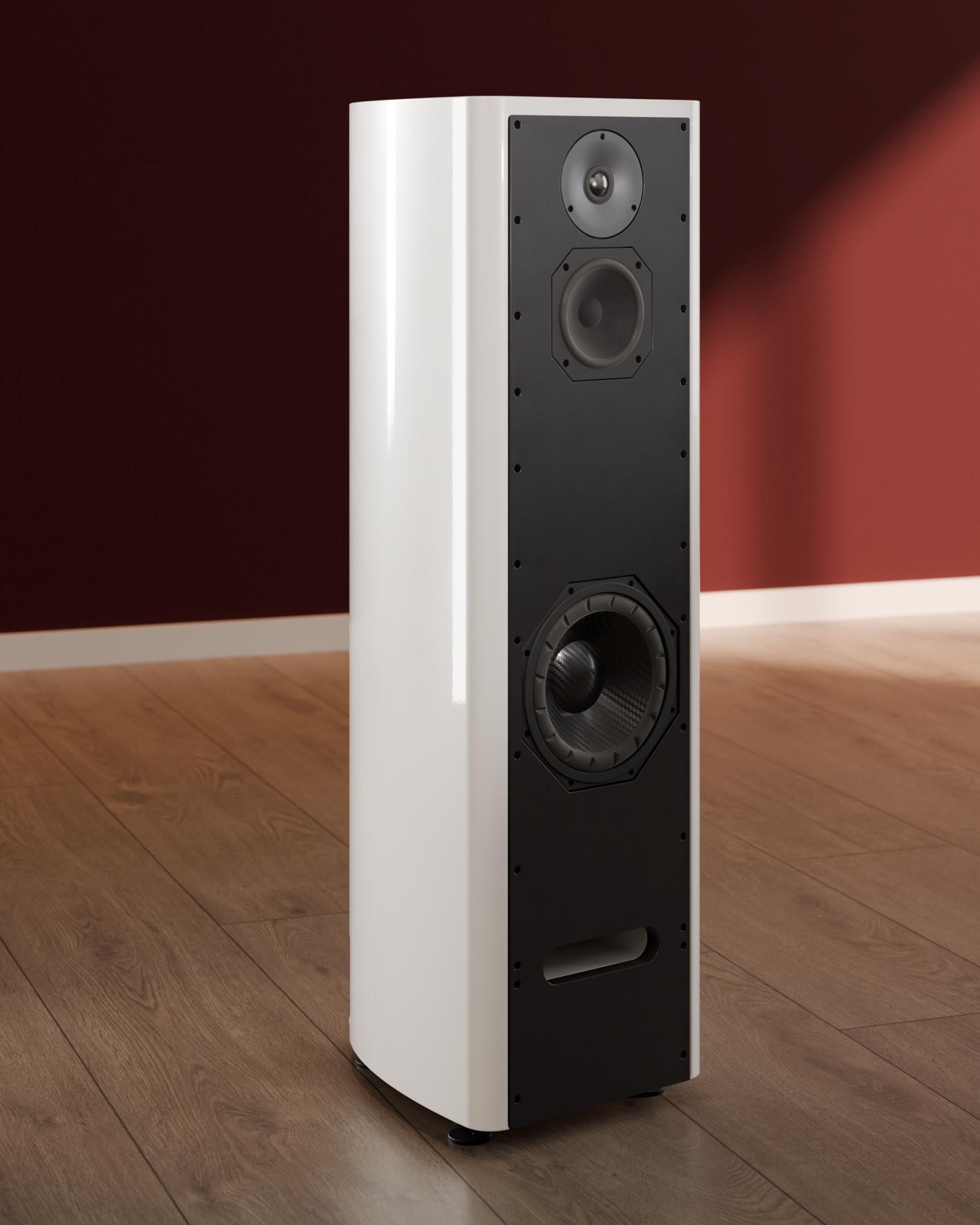
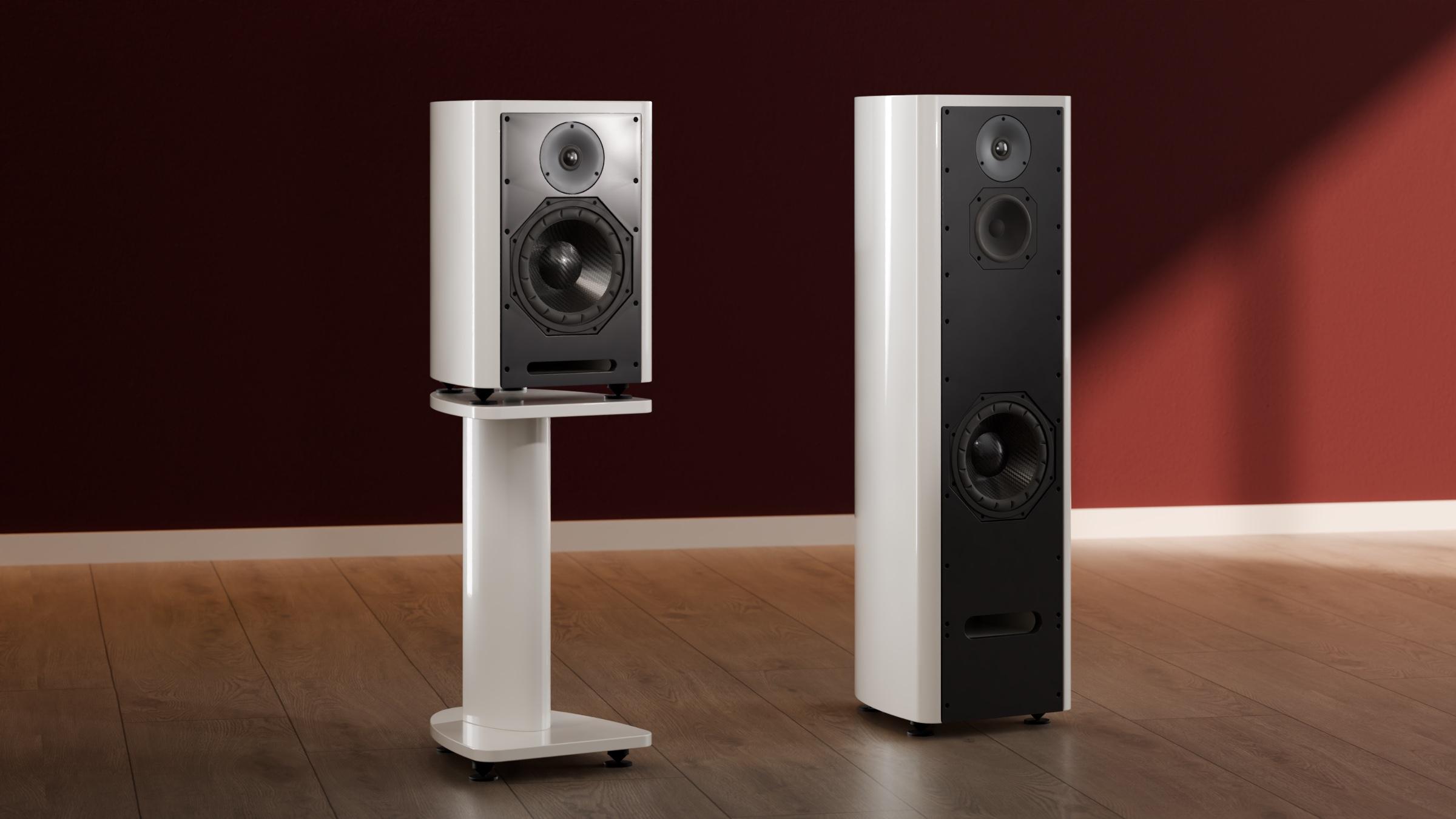
We have conceived Opus Magna as a three-way floorstanding speaker that takes our Lira architecture to a new scale. It brings together three drivers, separate acoustic chambers and a structure built in layers. It is a high-fidelity project that we are developing with the same attention to sound, form and construction.
At the design stage
Three ways define a new architecture.
In Opus Magna we have divided reproduction between three Beyma drivers: an 8-inch woofer, a 5-inch midrange driver and a dome tweeter.
Each way has a defined role within the system. The enclosure, the internal chambers and the passive crossover have been designed together to integrate the three drivers into a single acoustic proposal.
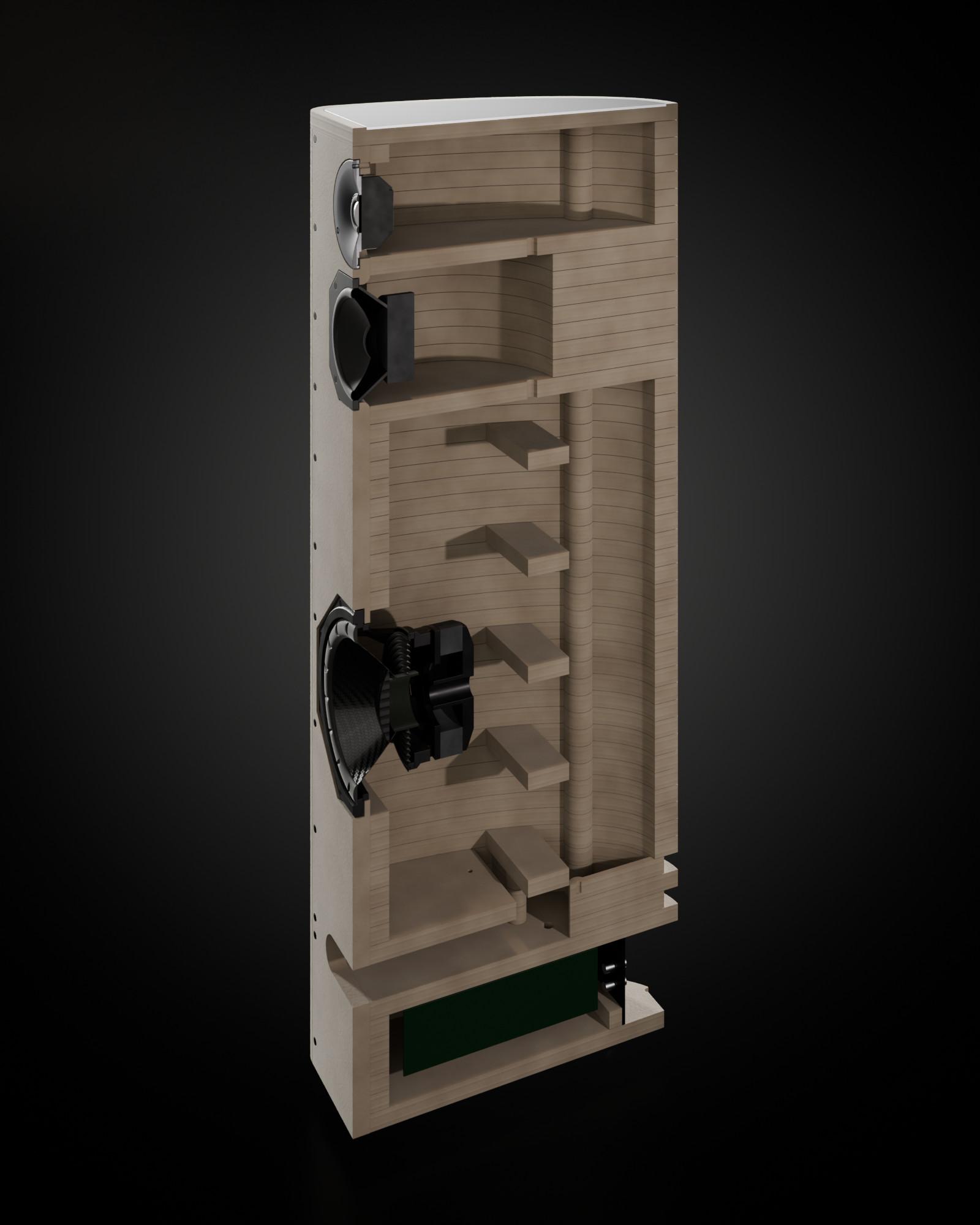
Every internal space responds to an acoustic decision.
The architecture of Opus Magna organises the volumes, the bracing and the connections around the needs of each way. We have developed every element as part of the whole.
01A chamber dedicated to the bass
The Beyma 8NMFW woofer works in a planned net volume of 31.9 litres. We have placed it at mid-height in its chamber to reduce the excitation of the first vertical resonance.
02The midrange has its own space
The Beyma 5MP60/N has a sealed chamber of 5 litres, independent of the woofer volume. The tweeter section is also sealed.
03The port is part of the structure
The bass-reflex duct is built from the layers of the enclosure themselves. A front slot of 155 × 38 mm defines its cross-section, with no need for a separate tube. Its geometry has been studied through simulation.
04The crossover has its own compartment
We have placed the three-way passive crossover in a lower box, separate from the woofer chamber. It shares this space with the four binding posts, and a rear cover gives access to the parts.
Precision in construction also defines its form.
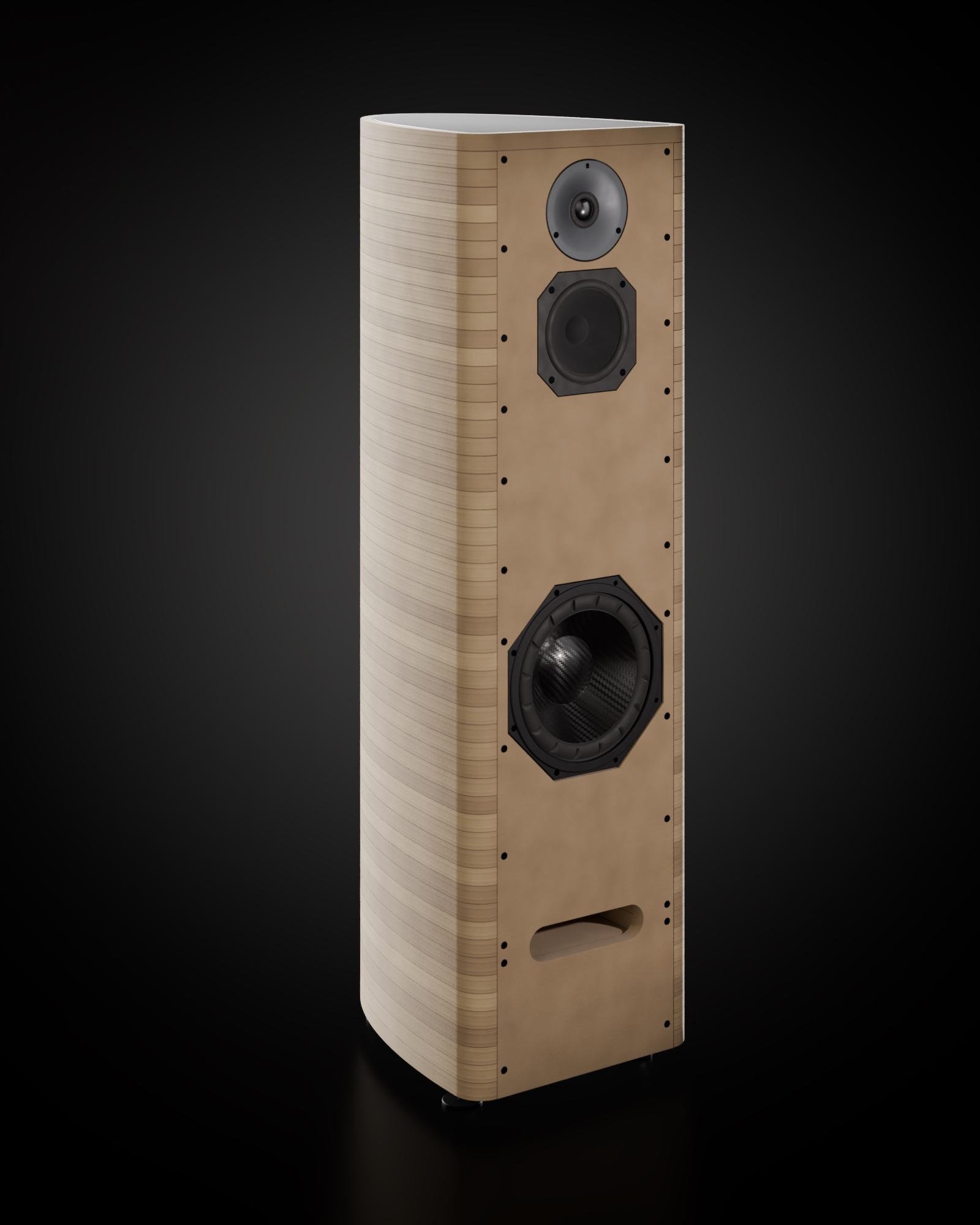
Opus Magna keeps the curved Lira profile and develops it into a column 1,026 mm tall. Its body is made of 54 layers of 19 mm MDF, joined mechanically by four M8 threaded rods, with no glue in the assembly.
The continuous baffle integrates the three drivers and the bass-reflex port. We have conceived every joint and every meeting of surfaces as part of the design, with an architecture that gives access to the interior and allows its parts to be dismantled.
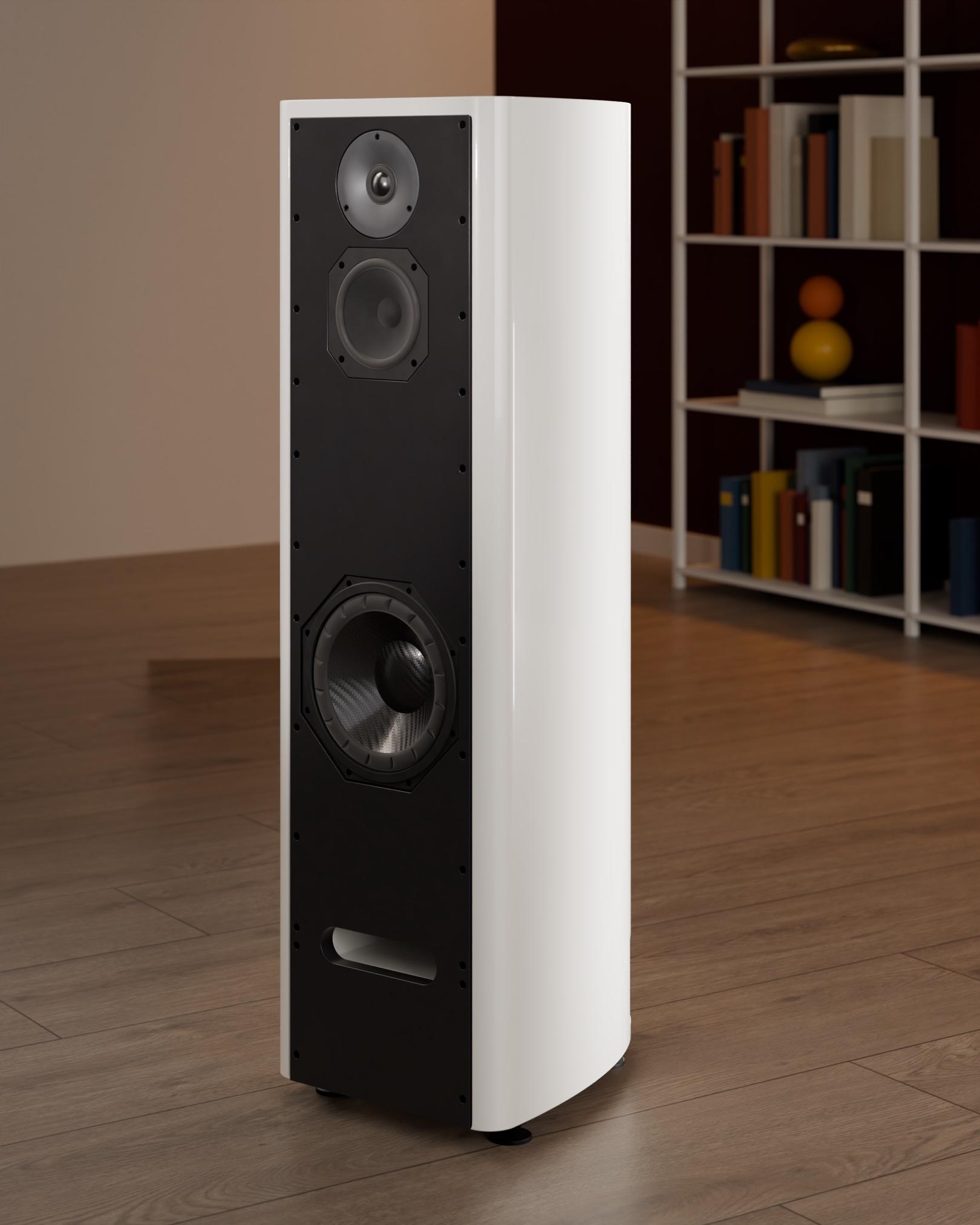
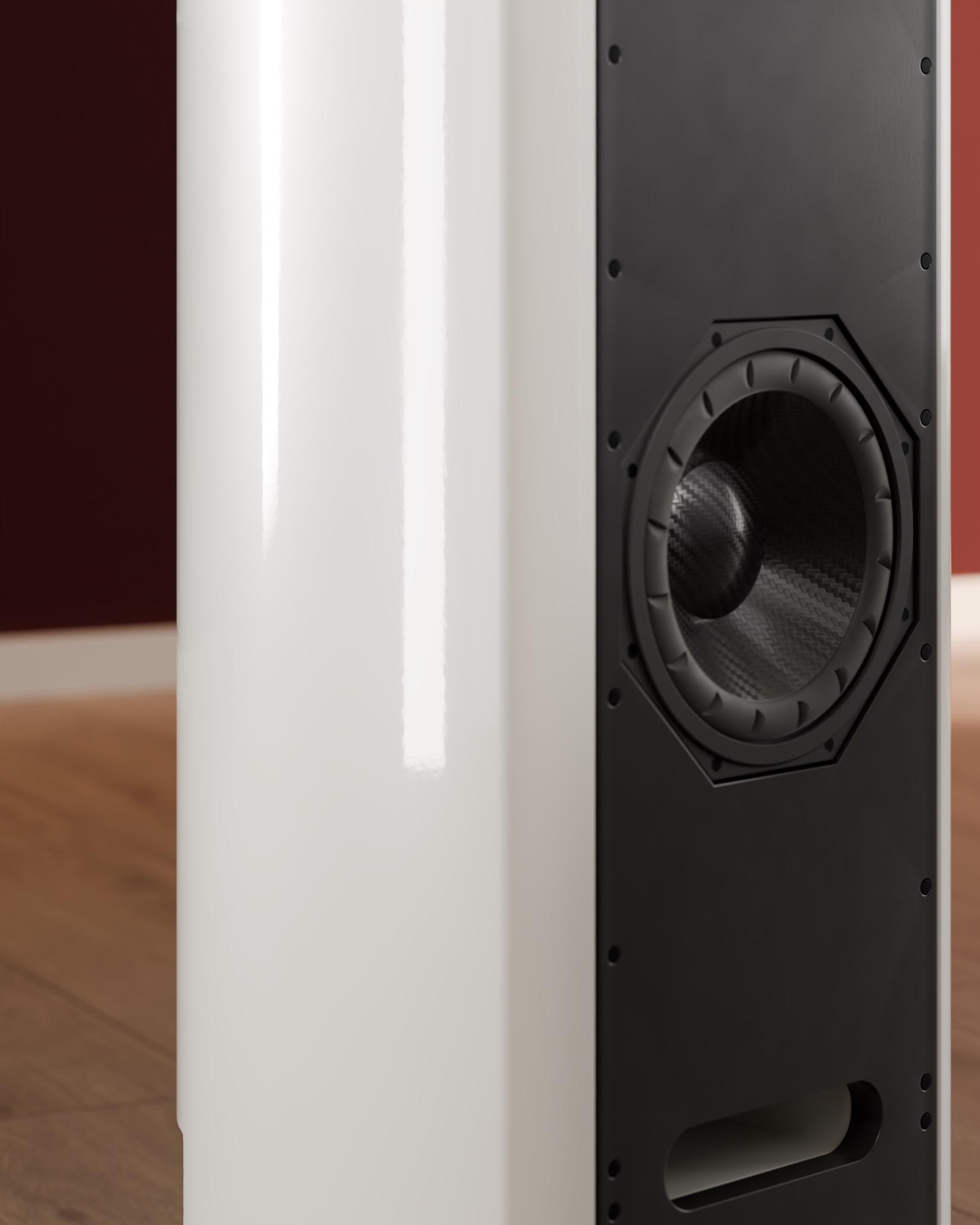
Baffle and body
The one-piece baffle follows the geometry of the enclosure and brings the three drivers together on a continuous surface.
Layers and joints
The 54 layers define the volume and the internal bracing. Four M8 rods hold the structure together with no need for glue.
Base and port
The bass-reflex slot opens at the bottom of the baffle. Its duct is integrated into the geometry of the layers.
The design is also expressed in figures.
Data from the Magna-0.4 design, as of 10/11/2026. They come from the digital model and the simulations, not from measurements of a physical prototype. They may be revised during development.
- Type
- Passive three-way floorstanding speaker, bass-reflex
- Drivers
- Beyma 8NMFW (8"), Beyma 5MP60/N (5") and Beyma T25M (1")
- Dimensions
- 304 × 388 × 1,026 mm, without feet
- Estimated weight per unit
- 43 kg
- Enclosure construction
- 54 layers of 19 mm MDF, joined by four M8 threaded rods
- Net volume of the bass chamber
- 31.9 L
- Volume of the midrange chamber
- 5 L
- Bass-reflex port
- Front slot of 155 × 38 mm
- Planned crossover frequencies
- 300 Hz and 2.5 kHz
- Crossover and connections
- Three-way passive crossover in the lower box. Bi-wiring, four binding posts.
- Amplification
- Passive speaker. It needs external amplification.
Designing also means verifying.
We have defined the acoustic architecture, run the simulations and prepared the digital model and the machining drawings for the layers. The next step will be to build the prototype, measure its behaviour and adjust the system based on the results.
Simulation results guide the development, but they do not replace measurements. We will publish the acoustic data once we have tested the prototype under documented conditions.
- Simulated acoustic design and 3D modelStatus: Done
- Machining drawings for the layersStatus: Done
- Building the physical prototypeStatus: Pending
- Measurements in a semi-anechoic chamberStatus: Pending
- Listening and crossover tuningStatus: Pending
- Going on saleStatus: Not defined
One architecture makes new possibilities worth exploring.
The modular construction of Lira has allowed us to conceive Opus Magna from elements of Opus I. The new design reuses 19 of its 23 layers, the woofer, the tweeter and the binding posts.
We also use the four M8 threaded rods in the upper part of the column. The system is extended downwards with extensions joined by threaded couplers.
We are developing an expansion kit that will add 35 further layers, a dedicated one-piece baffle, the midrange driver and a new passive crossover. In this way, the design of Opus Magna allows an Opus I to evolve by reusing part of its original components.
The expansion kit is in development and is not yet available. Its configuration and its acoustic integration will have to be verified while the prototype is built and validated.
Opus Magna keeps taking shape.
We want to share how the project evolves, from the first design decisions to construction, measurements and listening tests. If Opus Magna interests you, you can follow its development with us.