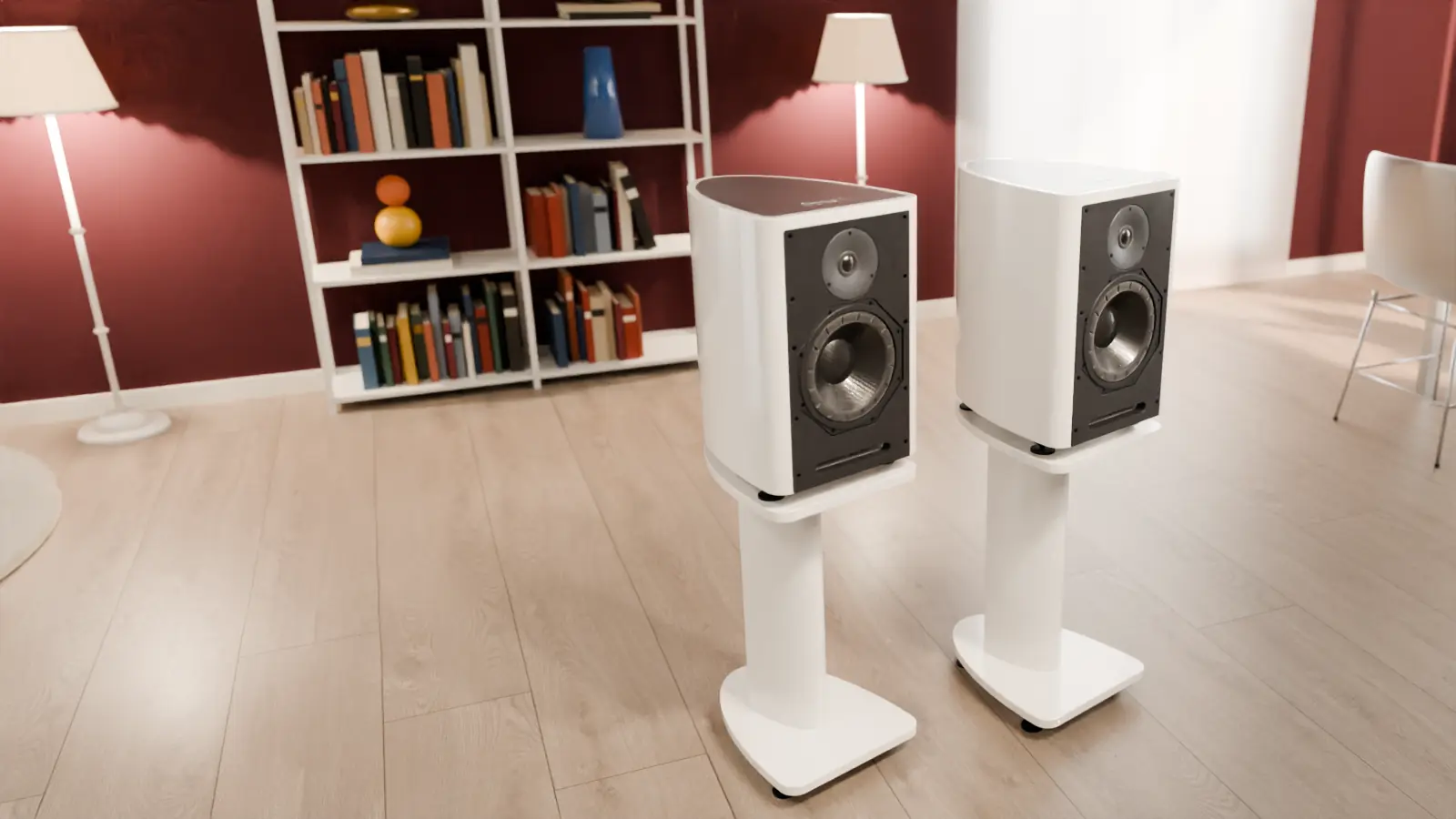
A two-way passive standmount loudspeaker in which the acoustic system, cabinet and construction have been developed as parts of a single idea. A considered design for attentive listening.
Passive loudspeaker · Requires external amplification.
The stands are optional accessories and are sold separately.
View detailsWe design each part to work with the others.
The quality and response of a loudspeaker depend on how its drivers, crossover and cabinet work together. With Opus I, we have considered these relationships from the outset: proportions, electrical integration, internal volume and construction.
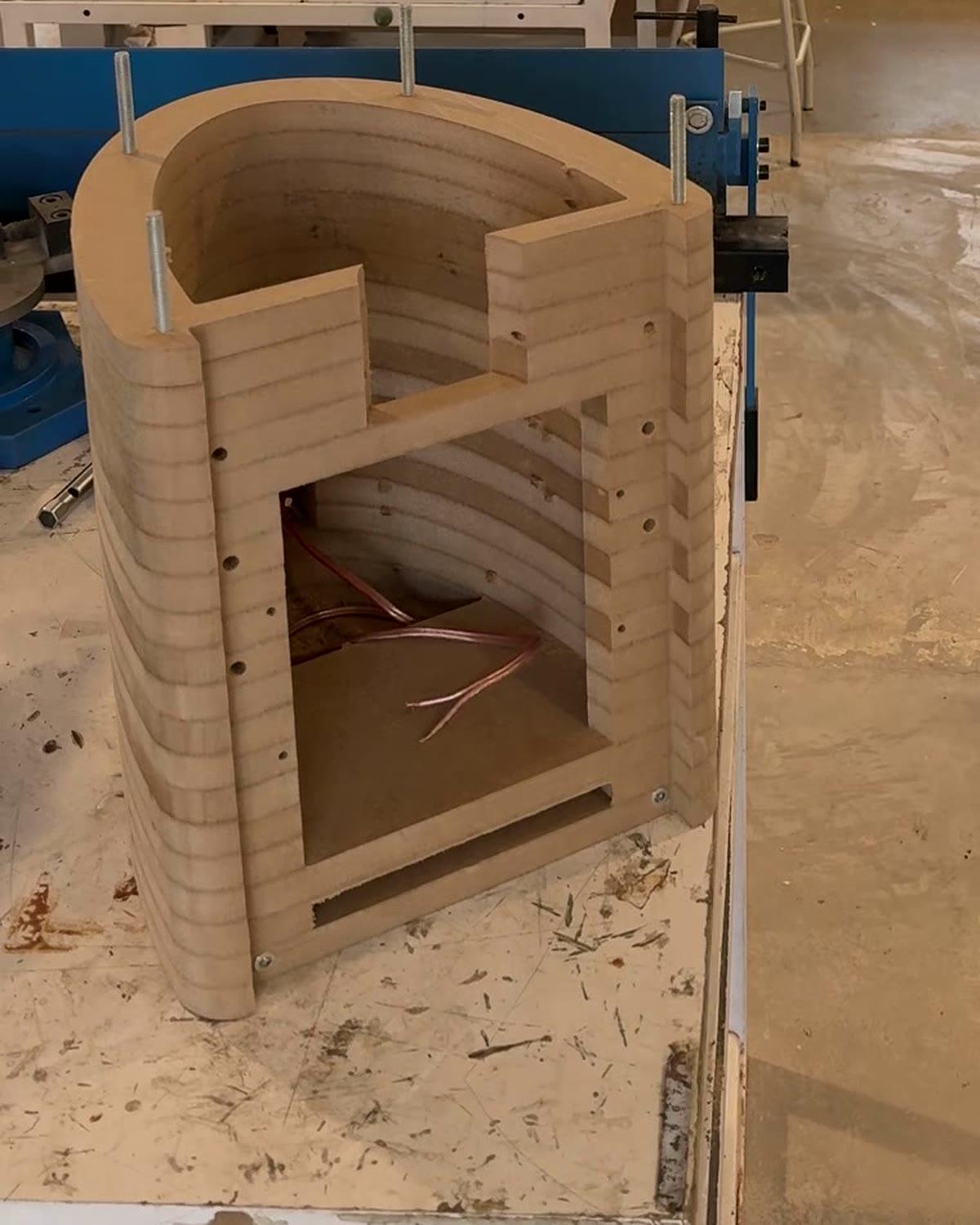
The curved geometry shapes the internal volume.
The lyre-shaped enclosure combines a carefully proportioned front baffle with a curved body built in layers. Its architecture allows internal volume, structural rigidity and manufacturing to be developed from a single geometric model.
- 23 layers of 19 mm MDF.
- 240 mm acoustic front baffle.
- Bracing integrated into the enclosure.
We integrate the two ways so they sound as one.
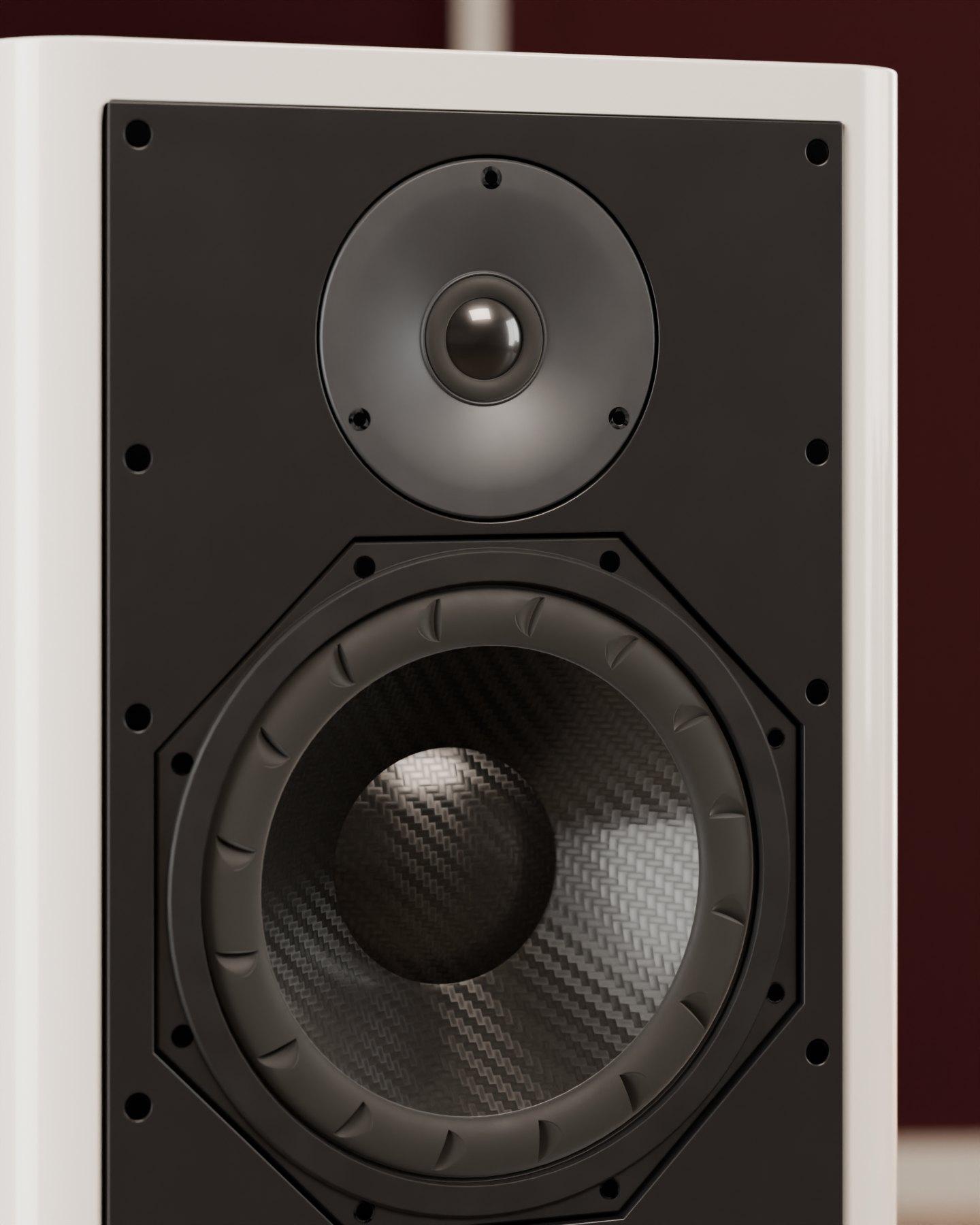
Opus I combines an 8-inch Beyma bass/midrange driver with a Beyma dome tweeter. The passive crossover determines how the two drivers work together. Choosing good components is only part of the task; what matters is how they perform as a system.
Beyma 8NMFW woofer · Beyma T25M tweeter · Two-way passive crossover.
Manufacturer photographs · Credit: Beyma
This is how the prototype measured.
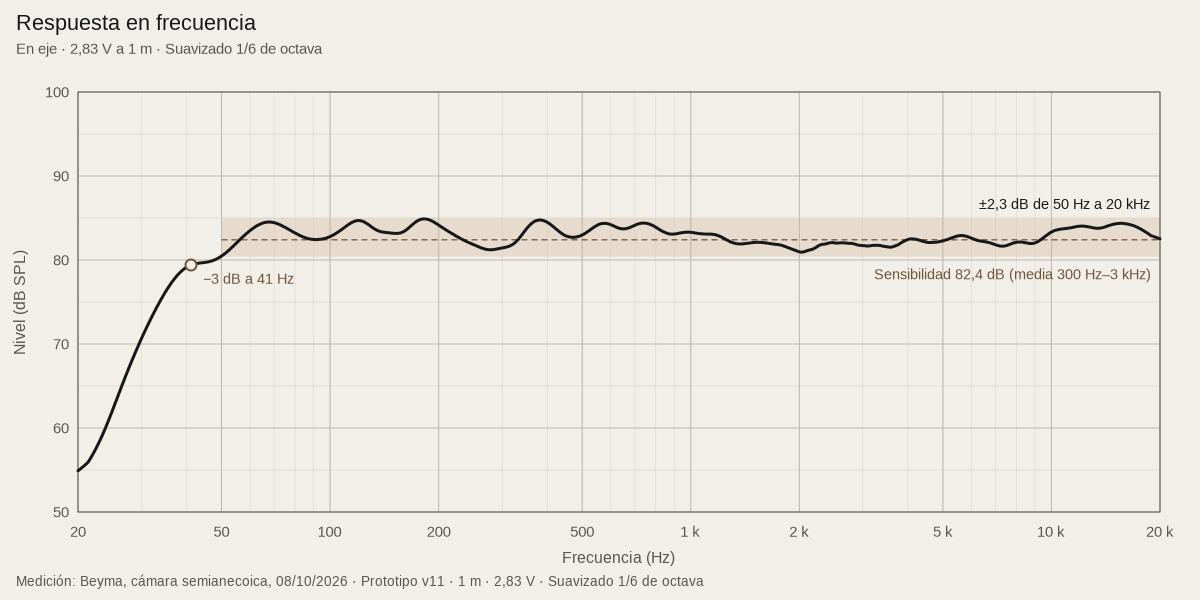
Tests on the Opus I prototype showed a uniform on-axis response, extended bass and low distortion under the measured conditions. These results help describe the system's acoustic behaviour; listening provides another essential perspective.
- 50 Hz–20 kHz
- ±2.3 dB
- 50 Hz–20 kHz
- −3 dB
- 41 Hz
- −3 dB
- 2.83 V / 1 m
- 82.4 dB
- 2.83 V / 1 m
Results from one unit of prototype v11, measured by Beyma on 08/10/2026 in a semi-anechoic chamber. The figures apply to the stated measurement conditions.
Opus I is demanding on amplification.
With a measured sensitivity of 82.4 dB at 2.83 V/1 m and a nominal impedance of 4 ohms, Opus I requires an amplifier that can handle 4-ohm loads and provide sufficient power headroom for the room and preferred listening level. This is worth considering when choosing an amplifier.
These specifications relate to prototype v11 and the measurements detailed in the technical documentation.
Opus I stays in view, so we take care over every finish.
A modern, understated aesthetic with a style of its own that makes it special.
304 × 388 × 437 mm
Width × depth × height; external dimensions of design v11.
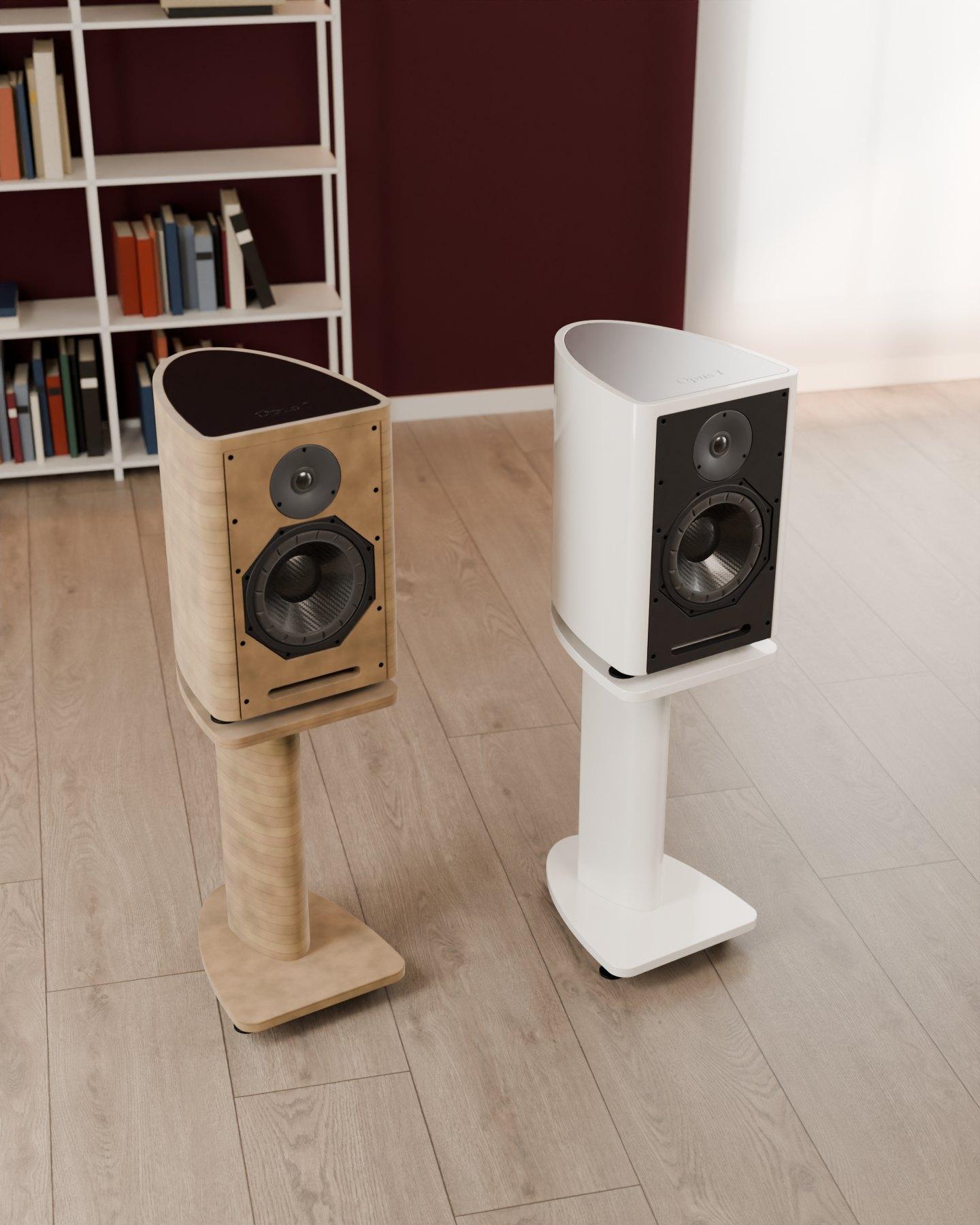
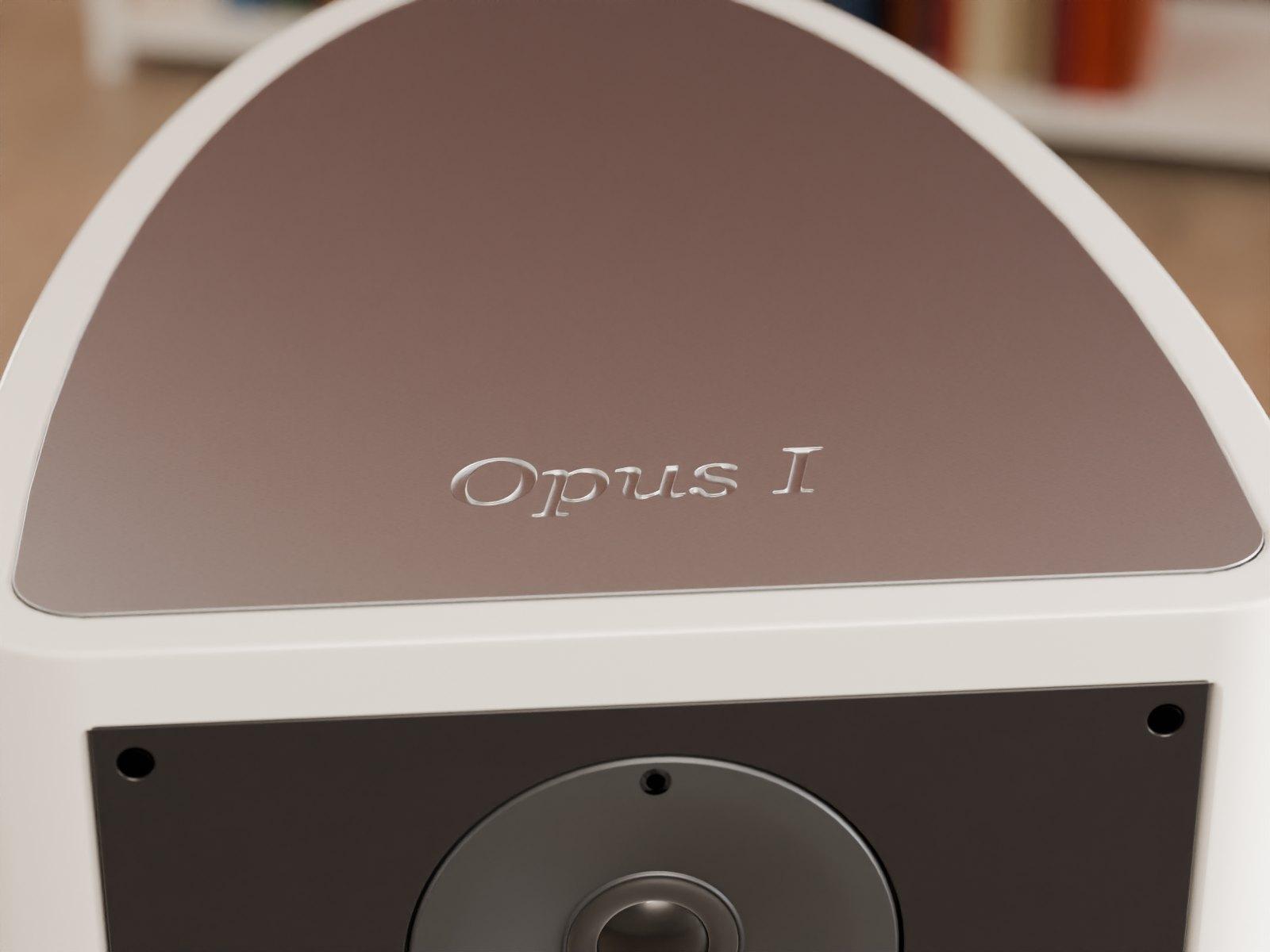
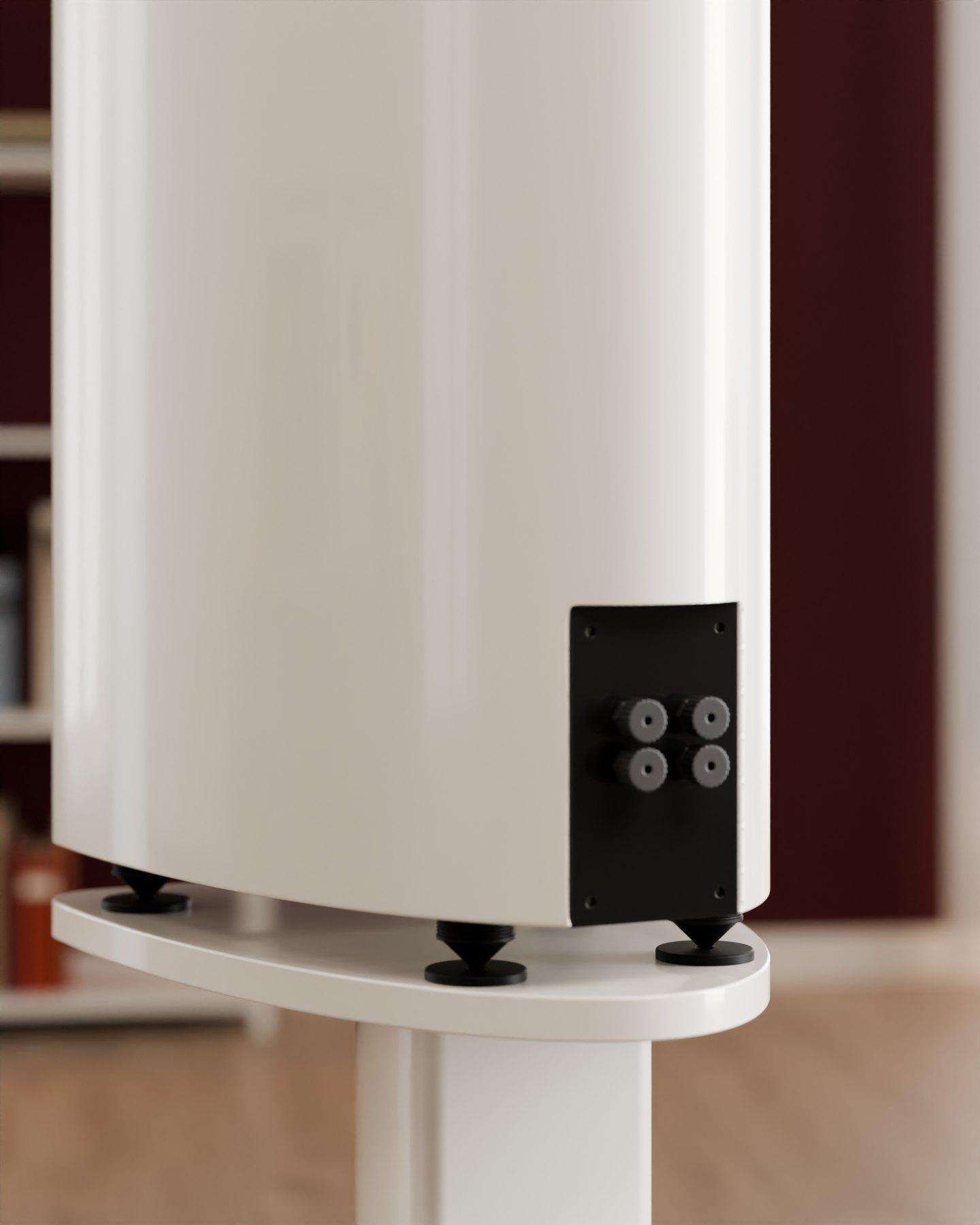
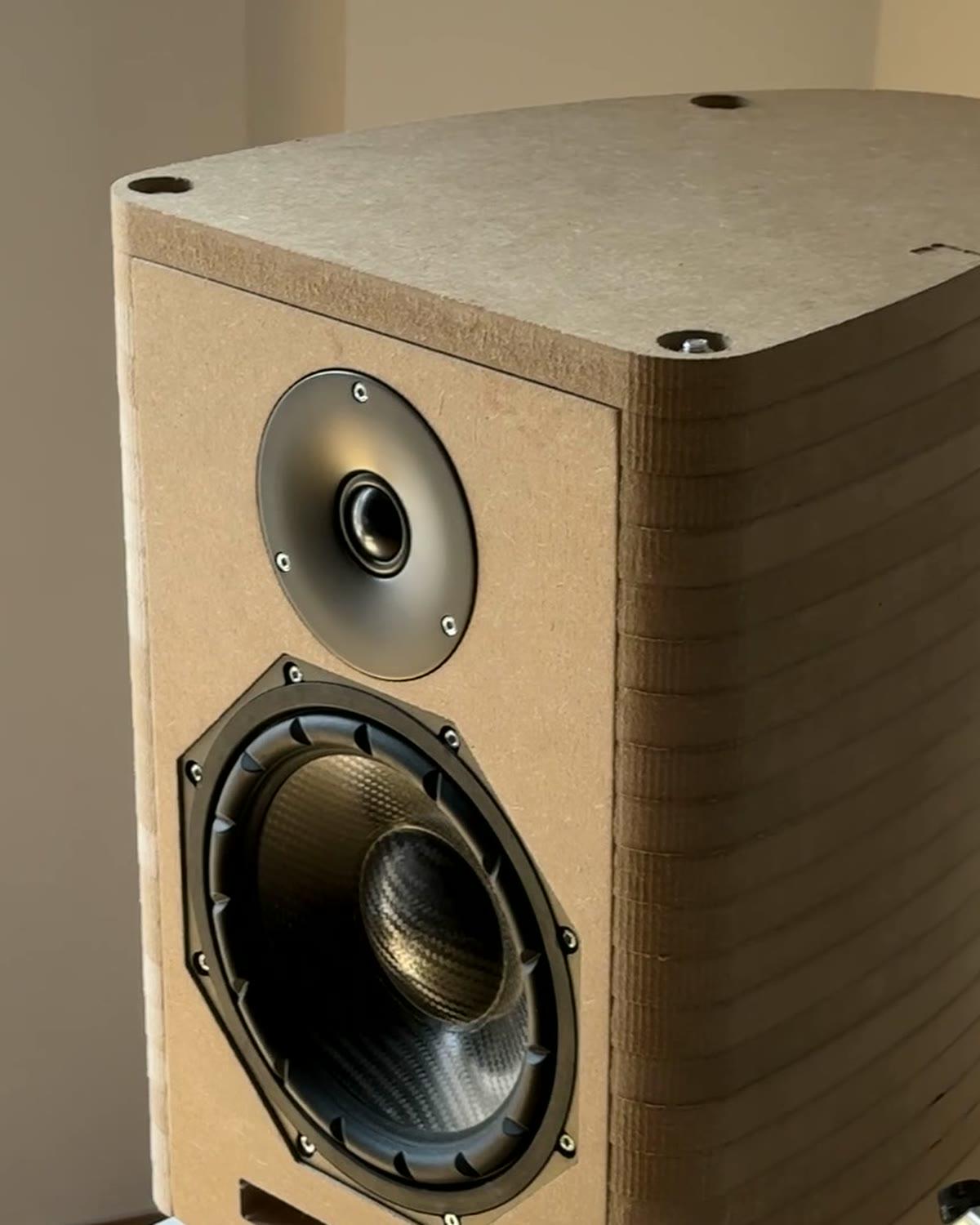
Prototype photograph 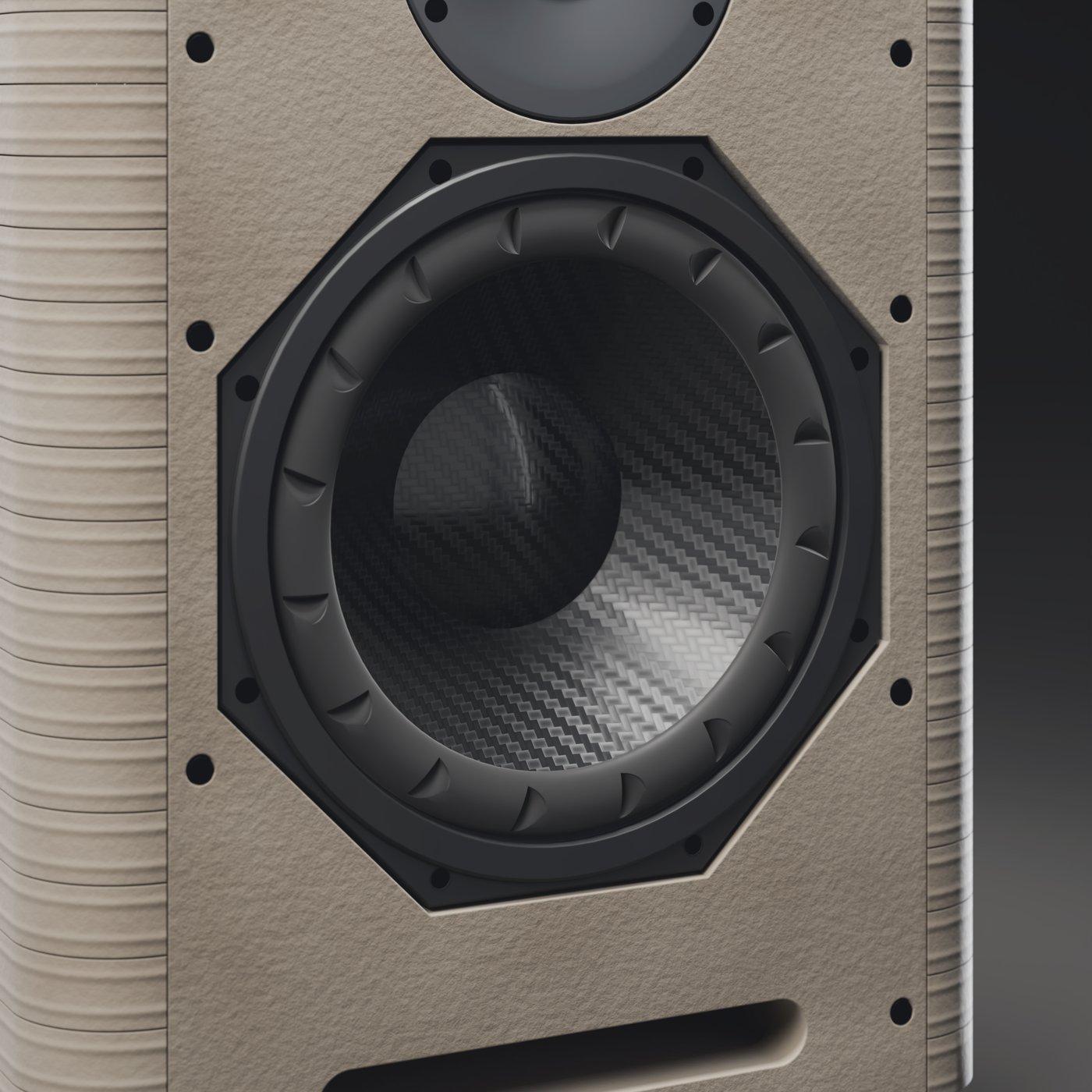
Prototype photograph
Photographs show the finishes specified for each image. Renderings are not a substitute for photographs of the finished product.
OPUS SERIES
The Lira architecture keeps developing.
We have conceived Opus I with a modular structure that makes new configurations possible. Opus Magna is our three-way floorstanding speaker in development: it shares part of this architecture and extends its possibilities with an acoustic design of its own.
OPUS SERIES
Opus Minor. Another way of understanding acoustic design.
We are developing Opus Minor, a two-way monitor that combines high-end components with a cabinet of essential construction. Its orthogonal geometry, its seven MDF pieces and its aesthetic identity define a proposal of its own within the Opus series.
Choose whether you want it assembled or as a kit.
If you want to concentrate on listening, we can supply Opus I fully assembled. If you would also like to take part in building it, you can choose Opus I Kit. The acoustic architecture remains the same. What changes is your role in the process.