- What type of loudspeaker is Opus I?
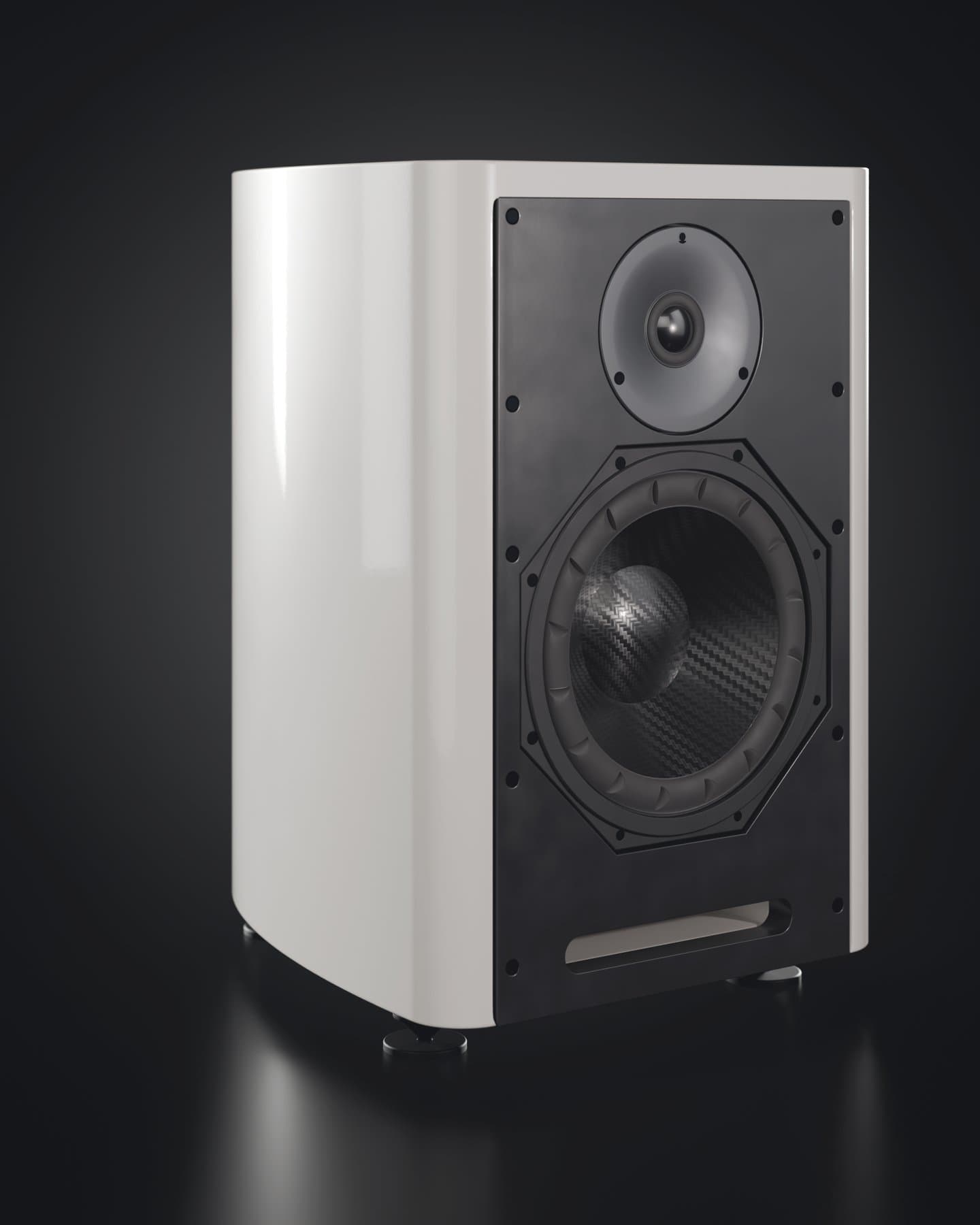
- Opus I is a two-way passive standmount loudspeaker featuring a Beyma 8NMFW 8-inch woofer and a Beyma T25M tweeter. It uses a Lira enclosure built from 23 layers of MDF and a passive crossover designed to integrate both drivers.
- What amplifier do I need for Opus I?
- We recommend an amplifier rated at 50 W per channel or more into 4 Ω. Opus I has a nominal impedance of 4 Ω and a measured sensitivity of 82.4 dB at 2.83 V/1 m. Most quality amplifiers designed to handle this load can drive it without difficulty.
- Can I use Opus I with a valve amplifier?
- Yes. Both transistor and valve amplifiers can deliver good results with Opus I. For valve amplification, we recommend a dedicated 4 Ω output and a power rating of at least 50 W per channel.
- What room size is suitable for Opus I?
- There is no universal minimum room size that determines the result. Listening distance, loudspeaker placement, room acoustics and amplification all influence how the system performs.
- What is the difference between Opus I and Opus I Kit?
- Opus I is supplied as a pair of fully assembled loudspeakers, finished in white lacquer by BRAM. Opus I Kit includes the parts needed to build the pair yourself, with Beyma drivers and passive crossovers already assembled and tested.
- What exactly is included in Opus I Kit?
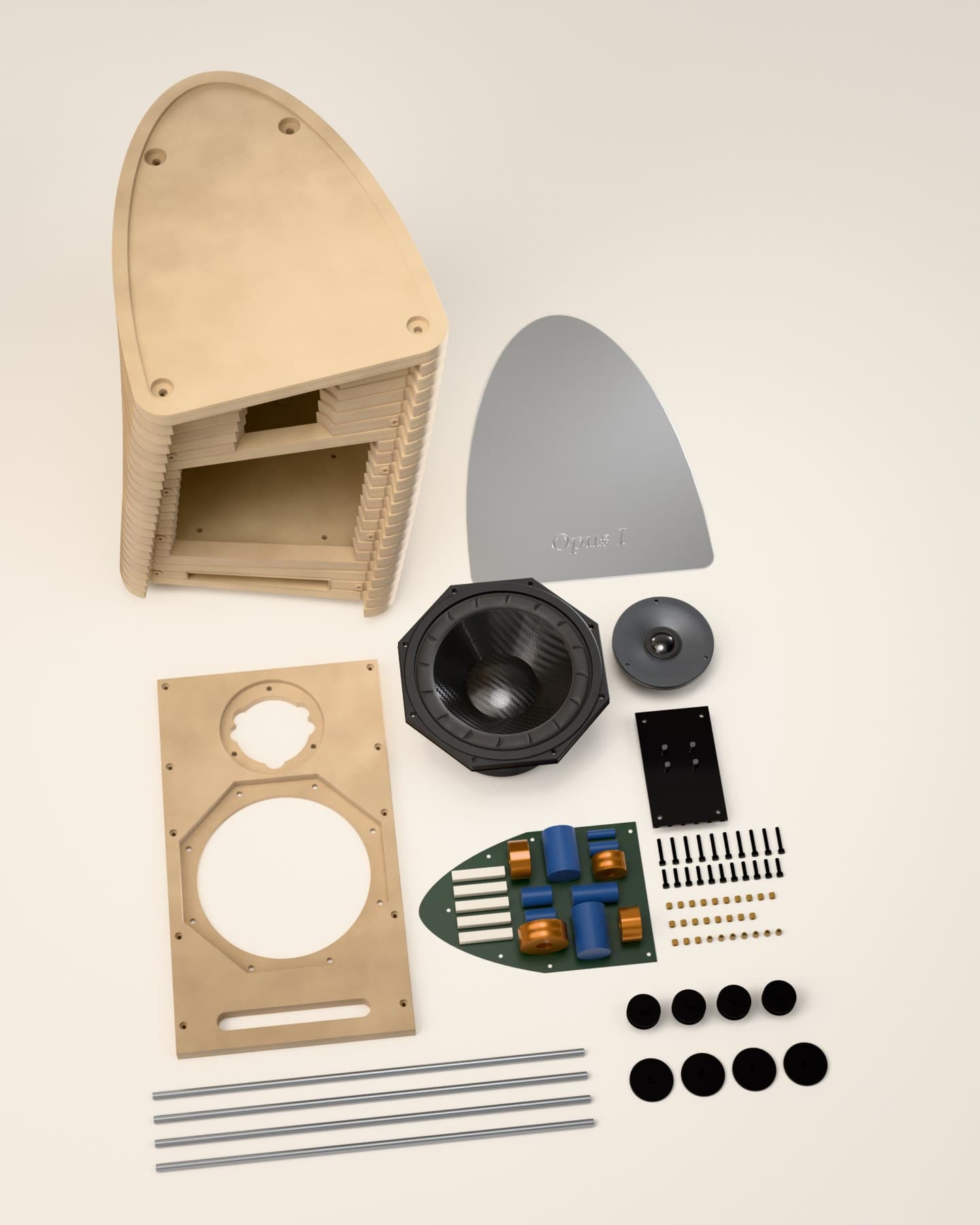
- The Kit is supplied in four packages, weighing approximately 46 kg in total. It includes machined MDF parts, Beyma drivers, two assembled passive crossovers, acrylic plates, sorted fixings and a printed assembly manual.
- Do I need to build the Opus I Kit crossovers myself?
- No. BRAM supplies both passive crossovers fully assembled and tested. You assemble the loudspeakers by following the step-by-step instructions included with the Kit.
- How are Opus I loudspeakers shipped?
- The fully assembled version uses custom-made packaging to protect the finished loudspeakers. The Kit is shipped in four packages, with its parts grouped and protected. Shipping costs, destinations and delivery times can be confirmed when placing an order.
- What warranty applies to Opus I and Opus I Kit?
- Both formats come with the three-year statutory conformity guarantee applicable to consumer sales in Spain. For the fully assembled version, it applies to the product supplied by BRAM; for the Kit, it applies to the supplied components. Buyers retain their statutory rights where incorrect assembly results from inadequate instructions.
- Can I pay for Opus I in three instalments?
- Yes. Opus I and Opus I Kit can be paid for in three instalments at no extra charge: 30% when placing the reservation, 30% before dispatch and the remaining 40% thirty days after receiving the loudspeakers. All three payments use the same card. Other products in the shop are paid for in a single payment.
- Can Opus I be taken apart once assembled?
- Yes. The 23 layers of the enclosure are joined by four M8 threaded rods, without gluing the body, and the baffle is independent and removable. The metal fixings allow the whole to be opened and reassembled as often as necessary, following the assembly procedure and making sure the baffle is properly sealed.
- Can Opus I be updated or extended in the future?
- We conceived Lira to allow the baffle to be replaced, the crossover and drivers to be accessed, and the volume to be modified through its layers. Its architecture also allows extensions and configurations with more ways to be studied, although each modification requires its own specific development and acoustic validation. These possibilities are not announcements of new models.